
When a “living bulldozer” comes back to work
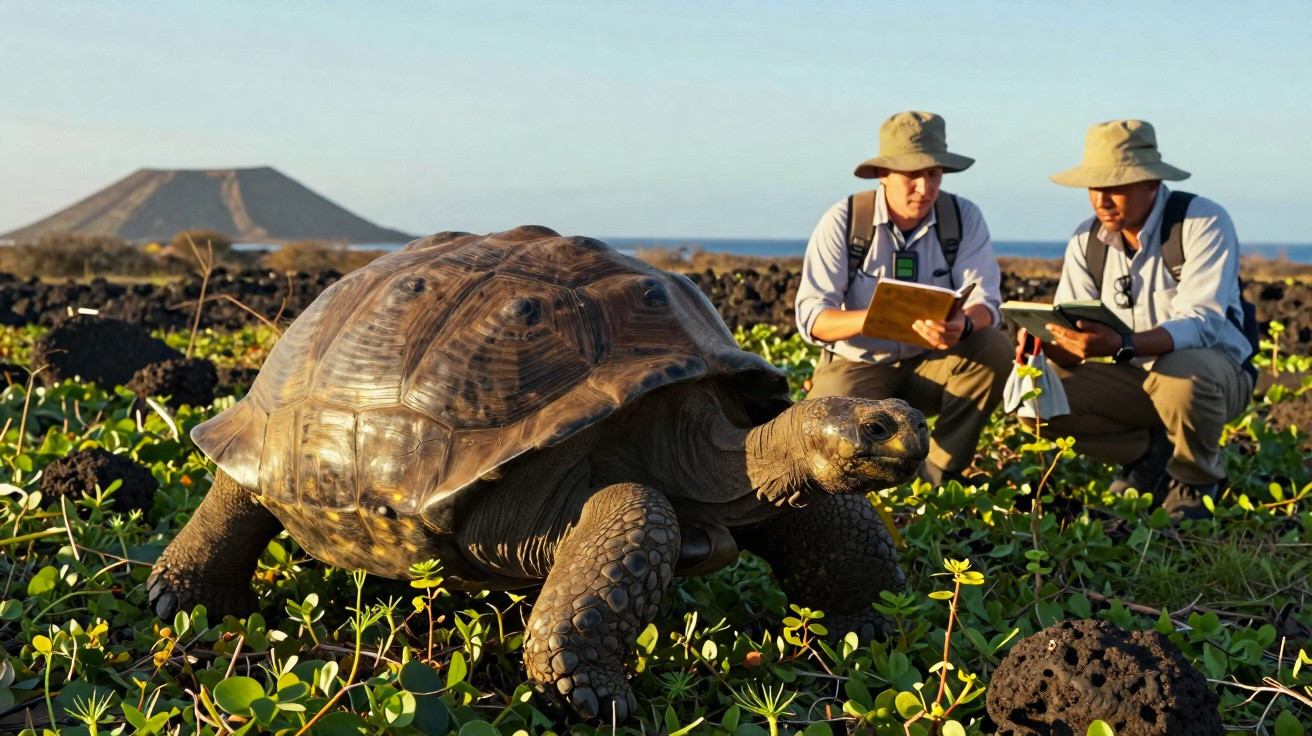
Ao princípio, quase passam despercebidas. As rochas de lava, os arbustos retorcidos e as ervas pálidas confundem-se numa só textura seca, a chiar ao vento. Até que um “pedregulho” decide mexer-se. Uma tartaruga-gigante ergue a cabeça, a boca manchada de verde, o olhar tranquilo como o de um agricultor velho a avaliar o tempo. Os turistas no trilho calam-se. As câmaras sobem. Ali perto, um guarda-florestal sorri, sem grande esforço para disfarçar. A tartaruga continua a mastigar - lenta, teimosa - como se aqui o relógio seguisse outro calendário.
É este o novo espectáculo das Galápagos: tartarugas-gigantes devolvidas a ilhas onde as pessoas as eliminaram, agora usadas como ferramentas vivas de recuperação ecológica. Abrem veredas, esmagam sementes, criam clareiras, fertilizam o solo. A ideia soa bonita - e até estranhamente arrumada.
Só que a paisagem nem sempre concorda.
On Española Island, early morning tastes like dust and salt. A convoy of plastic crates bumps along a dirt track, each box holding one irritated, 80-kilo tortoise. Rangers move carefully, half-weightlifter, half-nurse, as they unload them into a fenced corral. Gates open. Shells scrape. The animals lumber out with stubborn gravity, like they’ve been here all along and humans are the ones reintroduced.
This is the front line of a bold experiment. Rewilding with giants. People removed the tortoises for meat and oil. Now people fly them back in by helicopter to fix the damage.
Española used to be carpeted with shrubs and grasses. After whalers and settlers hunted tortoises almost to extinction, the island changed. Plants grew thicker, woody species took over, some bird nesting sites shrank under the green weight. So scientists started raising baby Española tortoises in captivity, releasing them by the dozens. Then the hundreds.
Over decades, their trails have cut through dense vegetation. Open patches have returned. Seeds of native plants hitch rides in their guts and get dropped, neatly fertilised, kilometres away. It’s landscaping by digestion. And it’s not just romantic talk: satellite images now show shifting plant cover where tortoises roam.
Ecologists like to call tortoises “ecosystem engineers”. Their bodies are slow, but their impact is heavy. Each step presses seeds into soil, each graze trims down aggressive plants. When enough of them move through an area, they reshape sunlight, water flow, even how fire might spread.
So bringing them back isn’t simply “put back what we took out”. It’s turning the key on a whole machine that’s been stalled for a century. The trouble is, nobody fully remembers what that machine looked like when it ran properly. We’re rebuilding a clock while it’s ticking.
The thin line between repair and remix
Reintroduction sounds tidy on paper: find the right species, breed it, release it, watch nature “heal”. On some islands though, the original tortoise lineage is gone. Extinct. So conservationists reach for the next best option: a close cousin from another island, or even a genetic mix pieced together from scattered DNA. It’s like replacing a missing book with a similar one and hoping the story still makes sense.
On Pinta, Floreana and other islands, these stand-in tortoises are now being tested as clean-up crews for invasive plants and runaway grasses humans brought in. They don’t read our plans. They just eat, walk and poop.
Take the case of Santa Cruz, the tourism hub of the archipelago. Over years, non-native guava bushes spread, thick and stubborn, choking native forests. Some conservationists floated a daring idea: draft tortoises as allies, letting them browse young guava shoots and crush seedlings. It partly worked. They hammered some areas back into more open habitat.
Yet as they wandered, the same tortoises also carried guava seeds deeper into the wild, wrapped in rich droppings. So you get this strange picture: the animal both fighting and farming the invader, like a gardener who pulls weeds from the path but then throws the seeds into the flowerbed.
This is the uncomfortable truth of restoration: nature doesn’t follow our neat arrows and flowcharts. Once you reintroduce a big, roaming herbivore, you release a web of new interactions that you can’t fully choreograph. A tortoise that spreads native cactus on one slope might be boosting invasive blackberry on the next.
Let’s be honest: nobody really models every ripple before those crates are opened. Managers are always playing catch-up, measuring vegetation, adjusting numbers, shifting fences. *Rewilding in the Galápagos is less like repairing a museum piece and more like improvising with a live band that never stops playing.*
Walking the slow path between boldness and humility
On the ground, the work looks surprisingly low-tech. Rangers track tortoises on foot, checking GPS tags, counting nests, stepping over dung piles that steam in the morning air. Some carry pruning shears to cut back invasive plants the tortoises like a bit too much. Others map which valleys are becoming grazed “lawns” and which remain overgrown thickets.
One practical rule keeps coming back: start small, watch closely, scale slowly. A dozen tortoises on a fenced trial plot can tell you more than a hundred spread over a whole island, especially when you’re not fully sure what plant will surge next.
It’s tempting to picture these projects as flawless eco-miracles. Reality is messier, and that’s not a failure, it’s the job. A tortoise population can rebound faster than expected, stripping too much vegetation. A sudden El Niño year might dry out food and push animals to new, fragile zones. We’ve all been there, that moment when a “great fix” in your life creates three new side problems you hadn’t seen coming.
So teams build in safety valves: regular vegetation surveys, flexible quotas for captive-bred releases, quick removal of tortoises from sensitive bird-nesting sites if things turn sour. The smartest managers treat every year as a fresh field trial, not a final victory lap.
“People want a happy ending,” one Galápagos ranger told me, squinting at a valley where tortoises grazed between shrubs. “What we really have is a long conversation with an island. Some days it agrees with us. Some days it doesn’t. Our job is to keep listening, not to win.”
- Watch the plants firstVegetation shifts faster than tortoise numbers, so tracking which species are spreading or shrinking gives the earliest hints of success or trouble.
- Protect what’s irreplaceableRare nesting sites for seabirds or endemic shrubs need buffers, even if that means fencing tortoises out of small “no-go” pockets.
- Mix science with local memoryFishers, guides and long-time residents often notice subtle changes in water, shade or animal behaviour years before they appear in published data.
- Accept some controlled messDemanding a “perfect” historical copy of the past can push managers into overcorrecting and over-managing every move the tortoises make.
- Keep the door open to course-correctionStopping or reversing a reintroduction is emotionally hard, but it’s sometimes the most honest form of care for a living landscape.
So do reintroduced giant tortoises fix human damage, or do they create a new ecological mess. The answer, standing under the fierce Galápagos sun, watching one of these animals grind a cactus pad into pulp, feels less like a verdict and more like a negotiation in slow motion. The islands we’re shaping now are not museum copies of the 18th century. They’re hybrids: part memory, part experiment, part climate-stressed future.
The plain-truth sentence nobody puts in glossy brochures is this: we’re not just restoring ecosystems, we’re editing them according to our fears, our science, and our sense of beauty.
For some readers, that’s unsettling. For others, it’s strangely hopeful. It means our choices about which giants to bring back, where to let them roam, how many to raise, are not just technical decisions for experts. They’re cultural ones, too. What kind of wildness are we willing to live with, and what kind of unpredictability can we accept in places we call “protected”.
Next time you see a photo of a child in front of a Galápagos tortoise, think beyond the cuteness. Behind that shell sits a whole argument about control, repair and responsibility, crawling slowly across a volcanic island.
| Key point | Detail | Value for the reader |
|---|---|---|
| Reintroduced tortoises are ecosystem engineers | They reshape vegetation, spread seeds and change light and soil patterns across the islands | Helps you understand why bringing back a single species can transform an entire landscape |
| Restoration is never a perfect rewind | Extinct lineages, invasive plants and climate shifts turn “rewilding” into a creative, imperfect process | Invites you to see conservation as a living experiment, not a clean before/after story |
| Monitoring and adaptation are non‑negotiable | Managers track plants, tortoise numbers and sensitive habitats, and adjust projects year by year | Shows how long-term attention, not quick fixes, keeps these iconic islands closer to resilient than broken |
- Question 1Are the reintroduced giant tortoises the same as the original ones that lived on each island?Not always. Some original island lineages are extinct, so conservationists use closely related species or hybrids that carry fragments of lost DNA. The ecological role can be similar, but it’s not a perfect match.
- Question 2Do tortoises really help control invasive plants in the Galápagos?Sometimes they do, by trampling or grazing young shoots, but they can also spread invasive seeds in their droppings. The effect varies by plant species and by island, which is why managers watch plant communities very closely.
- Question 3Could reintroduced tortoises harm native birds or other wildlife?They don’t hunt, yet they can indirectly affect birds by altering vegetation around nesting sites. If grazing opens or closes certain habitats too much, teams may fence tortoises out of sensitive areas.
- Question 4Why not just leave the islands alone and let nature sort itself out?Because past human impacts were huge and one‑sided, from hunting tortoises to importing goats and invasive plants. Many scientists argue that doing nothing now would simply lock in a damaged, unbalanced state.
- Question 5Can visitors see these restoration projects when they travel to the Galápagos?Yes. Many tour routes include breeding centres, highland tortoise reserves and marked trails where reintroduced animals roam. Guides often share the backstory, if you’re ready to ask more than just “How old is it?”.



Comentários
Ainda não há comentários. Seja o primeiro!
Deixar um comentário