
What the samples showed
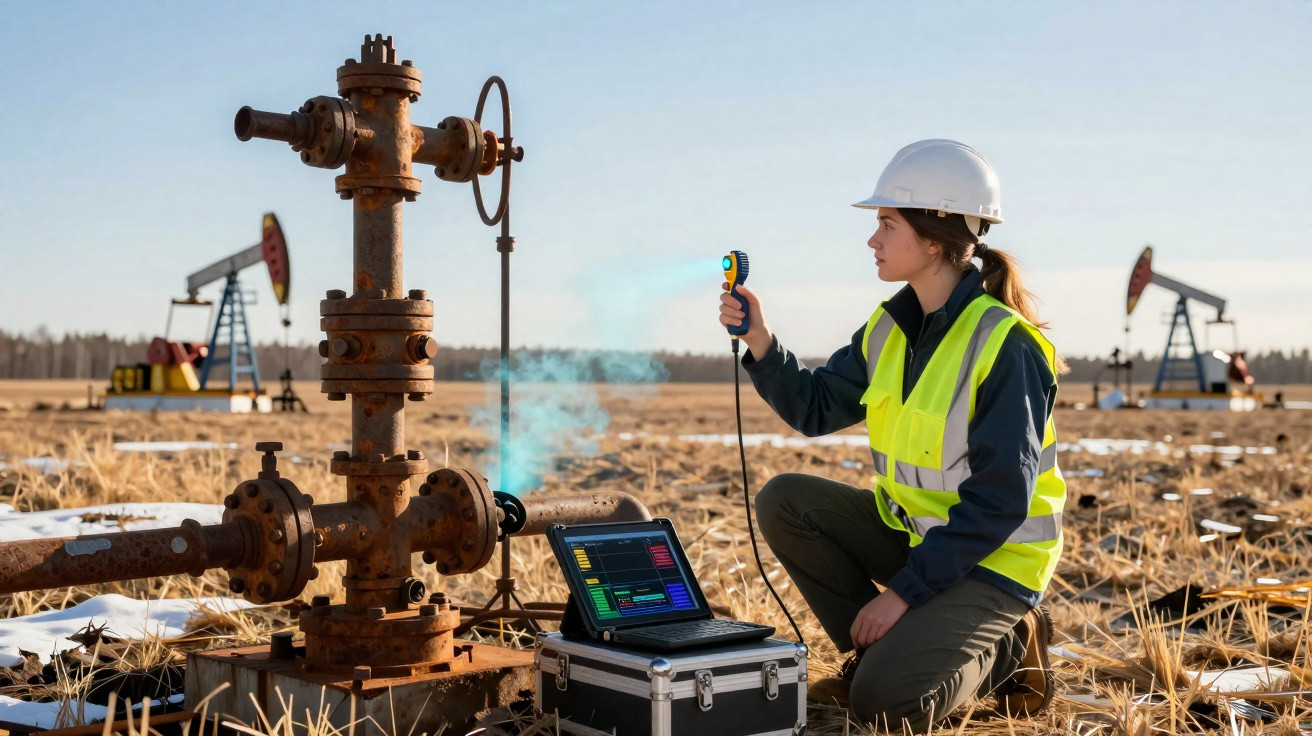
Quando se fala de poços de petróleo e gás “inactivos”, é fácil imaginar que já não têm impacto. Mas novas medições no Canadá mostram o contrário: muitos continuam a libertar metano feito por micróbios - e em quantidades cerca de 1.000 vezes acima do que se estimava.
O estudo indica que alguns poços podem continuar a alimentar a atmosfera muito depois de o petróleo ou o gás que motivou a perfuração já ter desaparecido, mantendo emissões persistentes ao longo do tempo.
Across 401 non-producing wells, microbe-made methane appeared far more often than earlier estimates had indicated.
Mary Kang at McGill University tied much of that overlooked pollution to gas rising from shallow underground formations.
Rather than displacing the deeper source story, the evidence showed that aging wells can vent methane from more than one layer below ground.
That overlap leaves the leak itself visible before the route supplying it is fully understood.
Why shallow gas matters
Microbes underground make microbial methane, gas formed by tiny organisms without oxygen, and this study shows old wells can vent it.
Unlike gas cooked deep in petroleum zones, this shallower source can outlast the reservoir that companies originally drilled.
“Methane is a powerful greenhouse gas when released into the atmosphere, regardless of its origin,” said Kang.
Cutting methane matters quickly because the gas traps more than 28 times as much heat as carbon dioxide over a century.
Tracing the sources of methane
To sort one methane source from another, researchers read stable isotopic signatures, chemical fingerprints that help reveal where gas formed.
Those clues, along with the gas mix itself, let the team classify emissions from 100 sampled wells.
Deep petroleum gases usually arrive with other heavier gases, while many shallow microbial gases look chemically simpler.
That fuller fingerprint matters because a repair plan can fail if crews misread which layer is feeding the leak.
Gas from shallow and deep sources
Most leaking wells still released thermogenic methane, gas formed when buried organic matter heats for millions of years underground.
Yet microbial gas appeared far more often than older work implied, upsetting the old picture of what inactive wells release.
Several samples also looked mixed, suggesting shallow and deep layers were sending methane through the same aging infrastructure.
That overlap helps explain why earlier counts missed a sizable part of the microbial contribution.
Routes through old wells
Non-producing wells can act as vertical escape routes, linking buried gas-bearing layers to valves, wellheads, and leaks near the surface.
In western Canada, a 2020 study described gas escaping through casing, cement failures, and pathways outside the well.
“However, the exact source of this methane is often unclear because the subsurface is a complex system with multiple gas-bearing formations,” Kang said.
That complexity means a crew can seal the visible leak and still miss the route supplying more gas.
Identifying the biggest sources
Earlier McGill fieldwork found the top 12 percent of emitting wells produced 98 percent of emissions.
Because a small fraction does most of the leaking, broad averages hide the sites that matter most.
Microbial methane complicates that search, since quieter wells may still release climate pollution from shallower formations.
The practical result is clear: find the worst emitters fast, then keep smaller leaks from becoming permanent sources.
A new measure of methane emissions
Older estimates usually treated microbial methane as rare, partly because deep petroleum gases were easier to recognize.
This team combined several chemical clues instead of trusting one marker that mixing or gas movement could distort.
Sometimes deep gas looks deceptively light, while blended gases blur the border from the other direction.
Using more than one clue did not erase every uncertainty, but it cut the odds of mislabeling leaks.
What repairs must block
Plugging and monitoring programs often focus on wells already known to leak heavily, yet source type shapes the right fix.
Gas rising through the main steel tube may need one response, while methane from nearby formations may need another.
Samples from valves near the well top sometimes pointed to shallower formations, showing that surface hardware can reveal different routes.
That matters for budgets, because crews can waste time sealing symptoms while the underground pathway stays open.
Targeting methane from old oil wells
Canada has nearly 500,000 non-producing oil and gas wells, and even a minority of leakers can add up.
Most of those wells sit in western provinces, where long oil and gas histories leave a vast cleanup burden.
California and other U.S. drilling regions have documented similar leaking wells, which means the problem crosses borders.
What changes now is the source map, because some old wells appear to vent methane from layers nobody targeted.
Old wells are not just leftover hardware but active escape routes for methane from more than one underground source.
That reframed picture should push monitoring toward repairs matched to the leak, while researchers test how gas keeps moving through buried rock.






Comentários
Ainda não há comentários. Seja o primeiro!
Deixar um comentário