
Why silver really tarnishes (and what your skin has to do with it)
A primeira vez que reparas, dá quase a sensação de que a prata te “virou as costas”.
O anel que adoravas no verão passado aparece de repente baço e acinzentado, esquecido num pires na prateleira da casa de banho. A pulseira que usavas em todas as festas agora está coberta por uma película escura, meio castanha. Esfregas com o polegar, sopras, tentas com a ponta da T-shirt. Nada. O brilho que tinhas na memória foi substituído por um lustro cansado, como se estivesse sempre sujo.
Começas a fazer contas: será que era bijuteria barata? Terei feito alguma coisa mal? Talvez o tenhas usado no duche vezes a mais. Talvez a tua pele “não se dê” com a prata. No TikTok, alguém jura que pasta de dentes resolve; outra pessoa garante nos comentários que isso estraga tudo. Procuras “como limpar prata em casa” e aparece uma imagem estranha: folha de alumínio, bicarbonato de sódio, água quase a ferver. Um feitiço de cozinha.
E é aí que começa uma espécie de magia discreta.
Silver doesn’t actually “go bad”. It reacts. The shiny surface you love is pure metal, but the air around it is full of tiny invisible troublemakers. Sulfur compounds from pollution, heating, even certain foods, cling to the silver and slowly turn it into silver sulphide, which looks dark, yellow or almost black. This isn’t dirt on top. It’s a new layer of material, born from contact with the world.
If you live in a city, that reaction goes faster. If you cook with a lot of garlic and onions, faster. If you keep your silver in the bathroom, right above the bottle of hairspray, even faster. Sweat plays a role too: some people’s skin is slightly more acidic or rich in certain minerals, and their jewellery darkens in days rather than months. The piece of silver is the same. The environment around it changes everything.
Think of that necklace your grandma kept in a velvet box. You open it decades later, expecting a dull, almost rusty chain, and instead it just needs a light polish. The box acted like a tiny shield, slowing the chemical dance between silver and air. Then compare it with the ring you leave on the sink, splashed by water, soap and steam daily. That ring is basically living in a mini chemical factory. Once you see tarnish as a reaction, not a defect, things start to make more sense.
Jewellers know this well. Many silver pieces are coated with rhodium or another protective layer to delay tarnish. Sterling silver (92.5% silver, 7.5% other metals like copper) is especially reactive because of that copper. That’s why some high-end brands add anti-tarnish treatments or sell storage pouches with each piece. It’s not marketing fluff; it’s chemistry meeting daily life. Understanding this is the first step to stopping the cycle of “buy, love, forget, find it ugly, shove it in a drawer”.
The kitchen-table experiment: foil, baking soda and a bit of chemistry
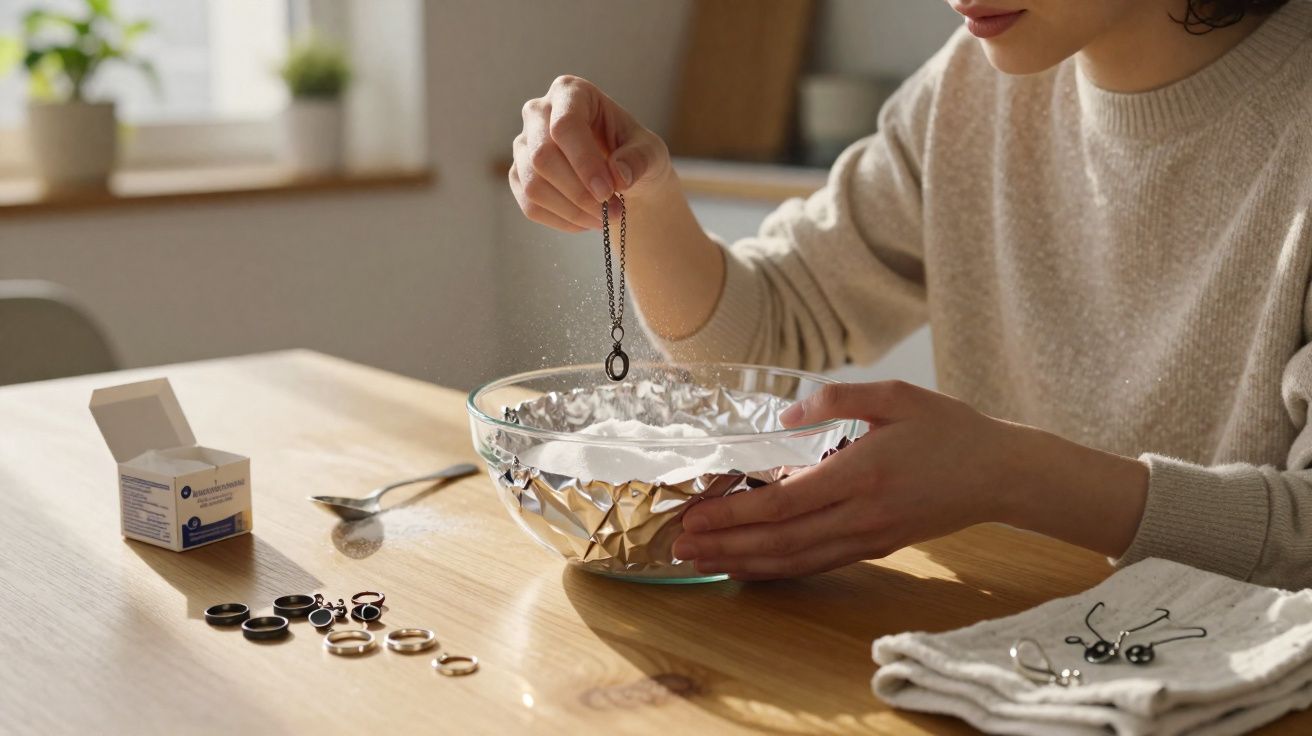
The aluminium-foil-and-baking-soda trick looks like something from a science lesson you half remember. You line a bowl with shiny foil, sprinkle in baking soda, add your tarnished silver, then pour in hot (almost boiling) water. Within seconds, a faint sulphurous smell floats up, and small bubbles form on the metal. You watch, slightly sceptical, as the dark patches start to fade. It feels like you’re cheating physics.
What’s really happening is a small redox reaction, quietly doing you a favour. Silver sulphide, that dark tarnish, is giving its sulphur back. The aluminium acts as the more “active” metal, basically volunteering to tarnish in the silver’s place. The sulphur moves from the silver to the aluminium, turning into aluminium sulphide on the foil. Your ring regains its silver surface, not by being scrubbed, but by being chemically restored. It’s less cleaning than time travel for metal.
The baking soda makes the water slightly alkaline, helping electrons move and speeding up the exchange between aluminium and silver. That light rotten-egg scent? It’s tiny traces of hydrogen sulphide escaping as bonds break and reform. The reason this feels so strangely satisfying is that you can see, almost second by second, the impact of a basic piece of chemistry on something you care about. You dip, you wait, you rinse, and an old favourite comes back to life in your hand like it never left.
Soyons honnêtes : personne ne fait vraiment ça tous les jours. You remember only when a big event is coming, or when you’re decluttering and stumble on a box of forgotten chains. The nice surprise is that the process doesn’t punish your procrastination. Unlike harsh polishing, this method doesn’t strip away layers of silver each time. It just reverses a reaction that was never personal in the first place. The tarnish wasn’t a judgement on your hygiene or taste. It was just silver being silver, in a world full of sulphur and steam.
How to use the foil-and-baking-soda method safely (without wrecking your jewellery)
Here’s the basic method that tends to work for plain sterling silver. Line a glass or ceramic bowl with aluminium foil, shiny side up. Sprinkle in two to three tablespoons of baking soda, enough to lightly coat the bottom. Place your tarnished silver pieces so they touch the foil. Then pour over very hot water from a kettle, enough to fully submerge the jewellery. You’ll see bubbles and maybe a faint smell. Leave it for two to five minutes, then fish the pieces out with a spoon, rinse under cool water and pat dry with a soft cloth.
This works best for chains, plain rings, and solid silver items without glued stones. It’s fast, cheap and oddly calming. You can repeat the process if the tarnish is heavy, giving stubborn pieces a second dip. Then comes the gentle buff with a microfibre cloth, which brings back that final mirror shine. One quiet advantage of this method is that it reaches all the awkward crevices a polishing cloth misses, like inside chain links or behind detailed patterns.
Where many people trip up is using it on the wrong items. Treated pearls, soft stones like opals, turquoise, amber, or anything with a glued setting don’t love heat and alkalinity. Vintage pieces with unknown finishes can also react badly. An empathic rule of thumb: if a piece is emotionally or financially precious, test on a tiny, hidden section first or ask a jeweller. Don’t be embarrassed; professionals deal with “I tried this hack I saw online” every single week.
“The most heartbreaking moments aren’t broken clasps,” a London jeweller once told me, “they’re heirlooms ruined by good intentions and the wrong cleaning trick.”
There’s a simple way to avoid that kind of regret:
- Use the foil method only on plain sterling silver, without delicate stones.
- Skip boiling-hot water for pieces that feel thin, fragile or antique.
- Never use toothpaste or abrasive powders – they scratch the surface.
- Store cleaned silver in soft pouches or zip bags with anti-tarnish strips.
- Wear your silver often – skin oils can slow tarnish more than you think.
Living with silver: better habits, fewer “oh no” moments
On a quiet evening, spreading your jewellery on the table can feel strangely intimate. Each piece carries a story: the cheap silver ring from a teenage summer, the bracelet you bought with your first proper salary, the locket that passed through three generations. Seeing them dull and forgotten can trigger a small wave of guilt, as if you’d neglected old friends. Cleaning them becomes less about vanity and more about reconnecting with parts of your own timeline.
The foil-and-baking-soda reaction gives you a practical way back. But beyond the quick fix, it whispers a small lesson about everyday care. If you get into the habit of removing silver before hot showers, swimming pools or hair-spray sessions, you stretch the time between deep cleans. If you drop a little anti-tarnish strip in the box where you keep your favourites, you stop that depressing “all my jewellery looks grey” moment before it starts. On a shelf in the hallway, a tiny dish for “rings off, keys down, day over” can quietly change your routine.
On a human level, there’s something grounding about restoring shine rather than throwing away and replacing. You’re not hunting for the next trend; you’re honouring what you already chose once. The tarnish that annoyed you in the morning becomes, later that day, a story you tell a friend: “I tried that baking-soda thing and my necklace looks brand new.” You might even send a photo. Small domestic transformations like this rarely make the news, yet they’re the ones that stay with us. The next time a bracelet darkens at the back of your wrist, you’ll know it’s just chemistry asking for another little ritual at the kitchen table.
| Point clé | Détail | Intérêt pour le lecteur |
|---|---|---|
| Pourquoi l’argent ternit | Réaction avec les composés soufrés de l’air, de la peau et de l’environnement | Comprendre que le ternissement n’est pas un défaut ni un signe de “mauvaise qualité” |
| Réaction aluminium + bicarbonate | Transfert du soufre de l’argent vers l’aluminium via une réaction redox douce | Savoir utiliser un geste simple de chimie pour restaurer l’éclat sans abîmer le métal |
| Bons réflexes au quotidien | Retirer les bijoux sous la douche, éviter les produits agressifs, mieux les ranger | Espacer les séances de nettoyage et garder ses bijoux brillants plus longtemps |
FAQ :
- Does tarnish mean my silver is fake?Tarnish is usually a sign of real silver reacting with its environment. Many fake pieces stay suspiciously bright or peel rather than darken evenly.
- How often should I clean my silver jewellery? For pieces you wear a lot, a gentle wipe every few weeks and a deeper foil-and-baking-soda clean every few months is often enough.
- Can I use the foil method on silver-plated items? Yes, but with care: frequent cleaning or very hot water can thin the plating over time, so keep sessions short and occasional.
- Is toothpaste safe for cleaning silver? It’s abrasive and can scratch the surface, especially on polished or detailed pieces, so professionals generally advise against it.
- Why does my silver turn black so quickly compared to my friends’? Your skin chemistry, sweat, skincare products and even the air in your home can speed up tarnish; it says more about your environment than about you.
```



Comentários
Ainda não há comentários. Seja o primeiro!
Deixar um comentário