
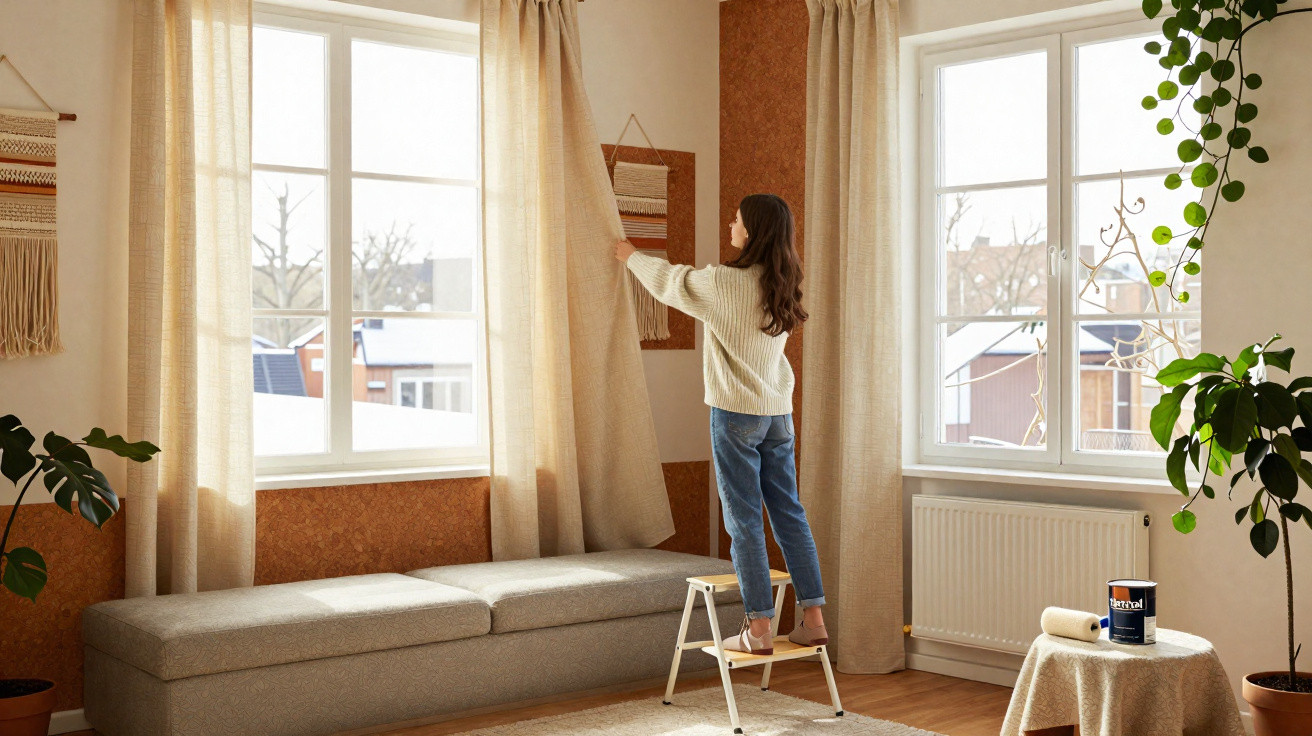
Why walls suddenly matter more this winter
As primeiras noites geladas costumam apanhar-nos desprevenidos - e, este ano, cada grau extra no termóstato pesa mais na fatura da energia.
Com a temperatura a descer e os preços a subir, muita gente em Portugal está a tentar resolver o mesmo problema: aquecer a casa sem obras, sem partir paredes e sem gastar uma fortuna. Lá fora, no Reino Unido e nos EUA, começaram a ganhar força soluções simples e baratas - algumas bem antigas, agora combinadas com materiais mais modernos - que ajudam a reduzir perdas de calor sem compromissos permanentes.
Across Europe and North America, housing experts warn that poorly insulated walls can leak up to a quarter of a home’s heat. That loss turns directly into higher bills, colder evenings and rooms you silently avoid. Full retrofits, internal or external insulation, often cost thousands and require professional crews. Plenty of renters and owners simply cannot go that route.
Instead of a single big project, more people stitch together small, reversible fixes that chip away at heat loss room by room.
This “patchwork insulation” mindset pushes decorative textiles, clever panels and smart furniture placement back into the spotlight. None of these tricks replaces serious insulation, but combined, they shift comfort levels in a very real way.
Thermal curtains: turning windows and cold walls into softer surfaces
The first battlefield usually sits right at the window line and on the chilliest outside walls. Thermal curtains have gone from niche buy to winter essential. They look like ordinary drapes, but include dense layers of polyester, foam or fleece that slow heat escaping through glass and thin masonry.
In day-to-day use, they help in three ways: they hold a pocket of air between fabric and wall, soften draughts, and cut radiant heat loss from a warm room towards the cold outdoors. In small city flats with single glazing, the change can be obvious as soon as night falls.
- Choose curtains that reach the floor and extend beyond the window frame.
- Install a rail or rod as close to the ceiling as possible.
- Close them fully as soon as the sun drops, leave them open when sunlight can warm the room.
A thick curtain over a bare exterior wall can act like a removable, textile “inner wall” that traps warmth after dusk.
Wall hangings and fabric panels: an old habit returns
Before central heating, families covered stone walls with tapestries, rugs and heavy fabrics for a good reason: textile plus trapped air creates a surprisingly useful buffer. That practice is resurfacing, just in a more contemporary style.
Big woven hangings, vintage rugs displayed vertically or stitched fabric panels create a second “skin” on cold facades. Wool, felt and velvet tend to work well because they’re dense but still breathable. They won’t turn a wall into a high-tech barrier, yet they take the edge off that “cold coming from behind you” feeling people notice near exterior walls.
Renters in older terraced houses now report a growing trade in second-hand rugs bought explicitly for walls, not floors. Social media is full of before-and-after photos where a bare, echoey room turns into a softer, quieter cocoon once the textiles go up.
Decorative insulation panels: foam, cork and hybrid boards
If you’re willing to attach something directly to the wall, decorative insulating panels sit between “no changes” and full-on building work. These light boards - often polyurethane foam, wood fibre or cork - fix with adhesive strips or screws and can stay in place for multiple winters.
They behave like a slim thermal jacket for your wall, nudging surface temperatures up and making rooms feel less damp and chilly.
Manufacturers increasingly sell modular tiles you can paint, stain or wrap in fabric. Some imitate wood slats or geometric 3D patterns, turning insulation into a visible design feature rather than a hidden layer. For renters, removable adhesive options or interlocking systems can allow a partial upgrade without friction with a landlord.
Cork panels: natural, quiet and moisture‑resistant
Cork, in particular, has picked up momentum over the last two winters. Taken from bark, it insulates, dampens noise and handles humidity better than many synthetic foams. That’s why it appeals for bathrooms, kitchens and north-facing corners that often feel clammy.
| Solution | Main benefit | Best location |
|---|---|---|
| Cork panels | Natural insulation, moisture resistance | Bathrooms, kitchens, exterior walls |
| Foam panels | High thermal performance, low weight | Behind radiators, under windows |
| Fabric hangings | Comfort, aesthetics, reversible | Living rooms, bedrooms, rented spaces |
Furniture as a thermal shield: bookshelves and sofas in strategic places
The cheapest tweaks can cost nothing at all. Simply shifting heavy furniture can change, little by little, how a room holds onto heat. A packed bookcase against an exterior wall adds mass and an extra layer, slowing the transfer of cold from outside to inside. A deep sofa or sideboard can do a similar job lower down.
Energy advisers often suggest a simple rule: put big, solid pieces against the coldest walls, but leave a small gap so air can circulate and to reduce condensation risk. Don’t block radiators or vents, or you’ll undo the benefit. Each item only makes a modest difference, but in a small room even a single degree counts. For book lovers, filling an outside wall from floor to ceiling can become a heating tactic disguised as decor.
Thermal paints: thin layers, subtle gains
So-called insulating or thermal paints are still debated. They apply like standard wall paint but include microscopic ceramic or glass beads. Makers say these beads reflect radiant heat back into the room, reducing that cold-surface feeling on bare walls.
Independent tests generally point to small improvements, not miracles. Even so, paired with other measures, that slight lift can raise surface temperatures enough to help reduce condensation and the cold, damp touch.
Think of thermal paint as a finishing layer that fine‑tunes comfort, not as a replacement for serious insulation.
People often use it on “problem” spots: behind a headboard, around a north-facing window, or above skirting boards where mould tends to show up. The comfort gain can feel bigger than you’d expect from such a thin coat.
Low-cost window and wall films: a plastic barrier against draughts
Transparent insulation films, long used on single‑glazed windows, are now being applied to adjacent wall sections and frames too. The sheet stretches across the opening and tightens with a hairdryer, trapping a thin layer of air. That extra membrane reduces the convective currents that steal warmth from a room.
They remain relatively cheap, take under an hour per window to fit, and can be removed cleanly. In older homes with leaky frames, combining these films with thermal curtains seals off some of the easiest escape routes for heat - without touching the brickwork itself.
Outdoor armour: climbing plants as living insulation
Not every fix needs to be inside. On the exterior, some homeowners lean on greenery. Ivy, Virginia creeper and other climbers form a living cloak that shades walls in summer and buffers wind in winter. Between leaves and masonry, a thin layer of trapped air slows heat loss and can also reduce overheating, depending on the season.
Used carefully, a green facade behaves like a seasonal coat: wind‑breaking in January, sun‑screening in July.
Specialists still recommend caution. Some vigorous roots can damage mortar or creep into roof spaces if neglected. The safest approach is often trellises or cable systems set slightly off the wall, plus regular pruning. In urban streets where planning rules limit major facade alterations, a light green layer can sometimes avoid bureaucratic hassle.
Reflective panels behind radiators: small change, noticeable effect
When radiators sit on an exterior wall, part of the heat they produce ends up heading straight outside. Thin reflective panels - usually aluminium-faced foam - solve this in a surprisingly simple way. They slip behind the radiator and bounce heat back into the room instead of letting it soak into the bricks.
Several national energy agencies now list these panels among recommended low‑cost measures for tenants. For a few pounds or dollars per radiator, they cut consumption a bit and reduce cold spots near the floor. In tight rentals, they often show up alongside draught excluders, window films and thick curtains as part of a stripped-back winter toolkit.
Stacking solutions: how far can “no‑works” insulation go?
Energy experts agree on one point: no single tweak here will turn an ice-cold flat into a cosy cottage. The real power of “no‑works” insulation is layering different fixes, each targeting a different kind of heat loss. Textiles reduce radiant chill, films tackle draughts, panels lift wall surface temperatures, and furniture slows conduction.
Put together with a bit of thought, these measures can allow you to drop the thermostat by several degrees without feeling less comfortable. With energy prices volatile and climate targets in view, that sort of everyday efficiency matters quietly but meaningfully. For many renters, this patchwork approach also offers a rare sense of control over a home they don’t own.
Checking risks and side effects before you start
Not every wall is suited to every trick. Before covering surfaces, specialists recommend checking for hidden damp or structural cracks. A thick curtain, panel or rug over a wall that’s already wet can trap moisture and encourage mould. In those cases, ventilation, drainage and basic repairs should come first.
Fire safety is part of the equation too. Heavy fabrics and tightly packed bookcases mustn’t block radiators, heaters, sockets or escape routes. Flame‑retardant textiles cost more but reduce risk in small bedrooms or children’s rooms. Lightweight foam panels near stoves or open flames raise similar concerns.
For households on the brink of fuel poverty, charities and local authorities in several cities now offer basic kits: draught excluders, window films, radiator reflectors and advice on furniture placement. These schemes treat “soft insulation” as a social measure as much as a technical one. Their spread signals a shift in how we think about winter comfort: less about one big renovation, more about layers, habits and the quiet power of fabric, cork and books.






Comentários
Ainda não há comentários. Seja o primeiro!
Deixar um comentário